
Health and Safety
Managing Health and Safety
Dubai Taxi Company manages health and safety through its Quality, Health, Safety, and Environment (QHSE) function, which provides weekly updates to management on HSE statistics, incidents, and near misses. Building on earlier alignment with the RTA’s OHS requirements, DTC currently operates according to its own independent HSE framework covering both environmental as well as health and safety aspects. The framework includes dedicated HSE and environmental procedures, communication and fatigue management processes, as well as structured risk and environmental assessments.
The Company’s Incident Management Policy outlines procedures for handling incidents ranging from minor events to those with significant impact on people, the environment, assets, or reputation. Complementing this, the Sustainability Policy affirms DTC’s commitment to maintaining a healthy, safe, and secure workplace for all employees and drivers.
Dedicated Health & Safety Policy
Advancing Health, Safety, and Environmental Policies
In 2025, DTC strengthened its Health, Safety, and Environmental governance by introducing and updating a comprehensive set of policies and management procedures to enhance operational control, risk management, and regulatory compliance across HSE functions.
Key HSE procedures issued and/or updated during the year include:
- Communication, Participation, and Consultation Procedure
- Emergency Preparedness and Response Procedure
- Energy Preservation Management Procedure
- Environmental Aspect Measurement, Monitoring, and Control Procedure
- Fatigue Management Procedure
- Health Control Management Procedure
- HSE Assessment Management Procedure
- HSE Performance Monitoring and Control Procedure
- Incident Management Procedure
- Waste Management Procedure

Operating Safely and Responsibly
DTC strengthens safety and operational responsibility through structured training, enhanced reporting and assurance, and the use of technology to manage risk. These measures support safe behaviours, stronger oversight, and consistent service delivery across the workforce and fleet.
Enhancing Training Quality and Inclusive Service Delivery
During 2025, DTC strengthened assurance over training quality by introducing an independent training effectiveness evaluation process. Following the completion of driver training, live feedback sessions are conducted on a weekly basis to assess training relevance, delivery, and impact, supporting continuous improvement across learning programmes.
In parallel, People of Determination awareness training was delivered to staff interacting with PoD passengers, particularly at the airport, reinforcing safe, inclusive and accessible service delivery across operations.
Independent training effectiveness evaluation
PoD awareness training
Strengthening Safety Awareness and Training
In 2025, DTC enhanced safety culture through a structured programme of induction, refresher training, and targeted awareness initiatives. A QHSE induction programme was delivered to all new joiners at the start of the year, followed by mandatory refresher training for all employees at year‑end. Dedicated HSE induction sessions were also conducted for new drivers in coordination with the Driver Happiness team, while 100 percent of workshop staff completed face‑to‑face training on Incident Reporting and the HSE Excellence Programme.
Safety awareness was further reinforced through internal communications focused on priority topics such as heat stress, fatigue management, and environmental awareness. All training and awareness materials were made accessible through the iConnect platform under the 'Safety First' section, supporting consistent knowledge sharing across the workforce.
100% of workshop staff completed Incident Reporting and the HSE Excellence Programme training
New QHSE induction programme
Leveraging Telematics to Enhance Driver Safety
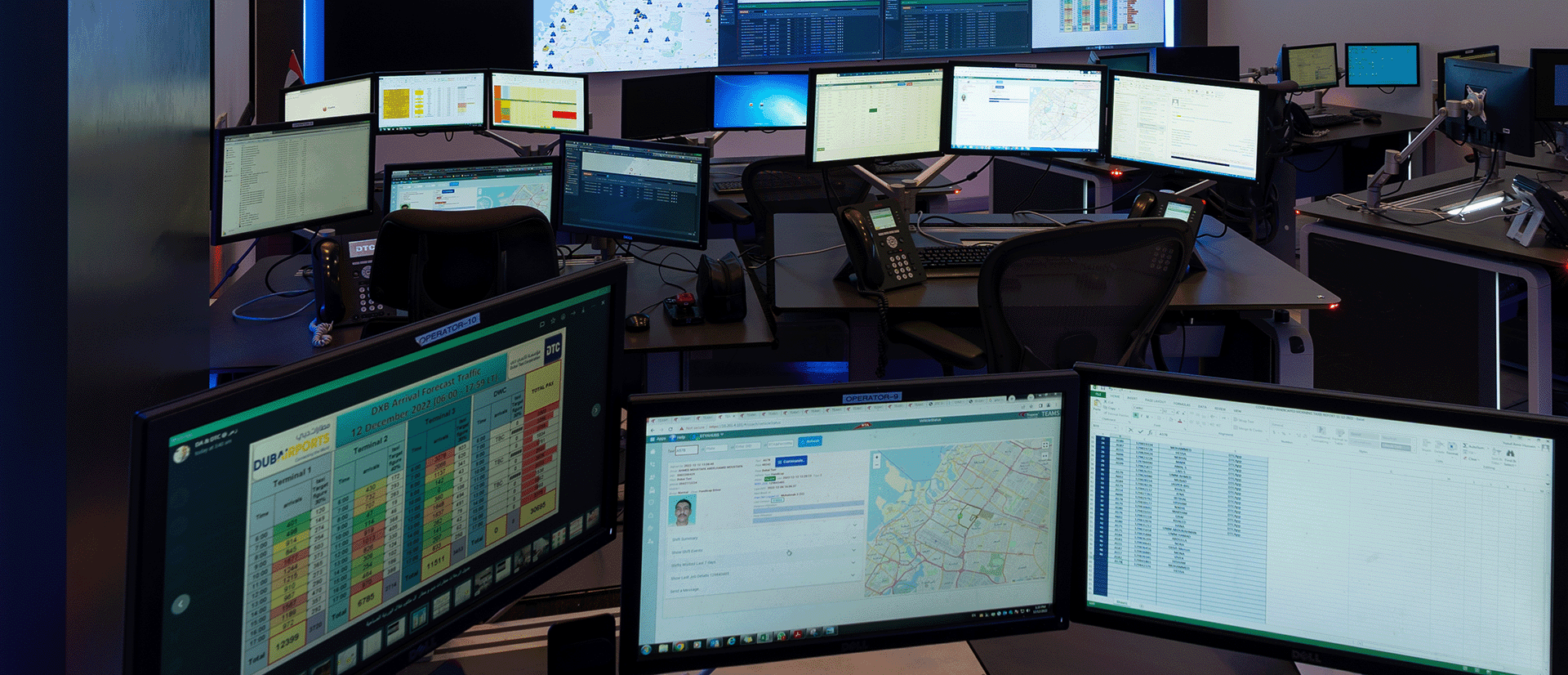
DTC is preparing to strengthen HSE performance through the planned implementation of advanced telematics systems in 2026. The system is designed to monitor key driving behaviour parameters, improve GPS optimisation, and support proactive vehicle maintenance, enabling earlier identification of safety risks and operational inefficiencies.
The telematics solution will be deployed across approximately 700 airport fleet vehicles, covering around 1,400 drivers. Performance data will be analysed through dashboards and trend monitoring to identify recurring issues and inform targeted training interventions. In parallel, a monthly driver safety score programme is planned to recognise and reward high‑performing drivers, reinforcing safe driving behaviours and continuous improvement in road safety performance.

Planned implementation of advanced telematics systems
Encouraging a Culture of Safe Driving
DTC ensures that all drivers receive comprehensive safety training during onboarding, covering maximum speed limits, seatbelt use, fatigue management, and defensive driving. Drivers with valid complaints or violations are enrolled in refresher courses tailored to the issue. Criminal background checks and driving history verifications are also conducted to uphold accountability.
To recognise excellence in safety, DTC holds an annual ‘Safety Award’ where the drivers and employees within DTC are provided with recognition and monetary compensation for exemplifying safe work ethic and performance.
Enhancing Incident Reporting and Emergency Preparedness
To strengthen incident management and proactive risk identification, DTC introduced an Electronic Incident Reporting Form in 2025, enabling employees to report accidents and near misses immediately in line with Company policy. To encourage active participation, a monthly recognition initiative was launched, rewarding the top three near‑miss reports with AED 500 vouchers.
DTC also conducted seven emergency testing and validation exercises during the year, including both tabletop and live drills. These exercises were designed to validate emergency response and business continuity plans, test coordination and communication among stakeholders, assess response effectiveness, and identify opportunities for further improvement.
New Electronic Incident Reporting Form
7 emergency testing and validation exercises conducted

Maintaining a Safe and Reliable Fleet
DTC maintains a robust vehicle lifecycle and maintenance policy to ensure reliability and safety. In compliance with relevant regulations, internal combustion engine (ICE) and hybrid vehicles are decommissioned after four years, while electric vehicles (EVs) are retired after six, at which point they are either sold or scrapped.
Each vehicle undergoes monthly inspections, with additional ad hoc checks as required. Accident analyses are carried out by specialists who provide recommendations to further reduce incident frequency and enhance safety performance.
Caring for the Health of Our People
Employee wellbeing is a key enabler of safety, performance, and service excellence across Dubai Taxi Company’s operations. To support this, DTC partners with clinics, hospitals, and insurance providers to deliver free on‑site health check‑ups every one to two months, giving employees and drivers convenient access to preventive care and medical guidance.
To further promote long‑term wellness, DTC offers:
Medical Check‑Ups
Free Vaccinations
Comprehensive Medical Insurance
